
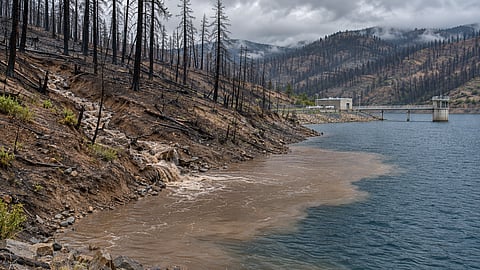
Bigger and More Frequent Wildfires Threaten Water Supplies Across the US
Bigger and more frequent wildfires are threatening drinking water supplies across the United States by sending ash, sediment and organic matter into streams and reservoirs. New research suggests contamination from burned watersheds can persist for up to eight years, while some communities may face water-quality impacts lasting more than a decade.
So far in 2026, 68,179 wildfires have burned more than 9.5 million acres in the US. Climate change and stronger El Nino weather events, which intensify drought conditions, are contributing to larger and more frequent fires.
After a wildfire, rainfall can carry ash and organic matter into streams that feed water treatment plants. Forested watersheds provide water to nearly two thirds of municipalities in the US, making wildfire-related contamination a major risk for drinking water systems.
Wildfires can cause spikes in heavy metals and dissolved organic matter that treatment plants are not designed to handle. This can force utilities to shut off incoming water and switch to alternative sources, including groundwater or reservoirs, which may themselves be affected.
Sediments from burned vegetation are rich in nutrients such as nitrogen and phosphorus. When they settle in reservoirs, they can fuel algal blooms that may make people sick and kill fish.
Chlorine used to disinfect water can also react with dissolved organic matter left behind by fires, forming regulated disinfection byproducts. Because treatment plants cannot remove these byproducts after disinfection, they must remove the organic matter beforehand, which can delay water supplies.
In Las Vegas, New Mexico, the 2022 Hermit’s Peak/Calf Canyon fire contaminated the Gallinas River, leaving residents without reliable water for months. The state and federal governments have since allocated $148 million to rebuild the town’s treatment plant and develop alternative water sources, including wells and water reuse.