
Nepal’s Community-Led Water Crisis Solution Wins The 2026 International Water Air Food Award
Copenhagen, Denmark, November 20, 2026: The Water Air Food Awards (WAFA) announced Partnership for Sustainable Development, Nepal, the winner in the Water category for its project Water Security for Deprived Communities in Butwal, Rupandehi District. The winners were announced at the Generation Green Workshop, held as part of the Green Business Forum 2026 at Copenhagen Business School (CBS). The initiative was chosen from 12 finalists from 10 countries across 5 continents, based on community-led impact and how well its nature-based solution can be scaled and replicated.
From contaminated water to community-run systems
In Nepal, only 13% of the population has access to safely managed drinking water. For years, families in deprived communities in Butwal relied on contaminated water for drinking, cooking, and cleaning. Waterborne diseases such as diarrhea and typhoid were common, especially among children. Illness kept students out of school and adults away from work, and poor sanitation made it especially hard for girls to attend school during menstruation.
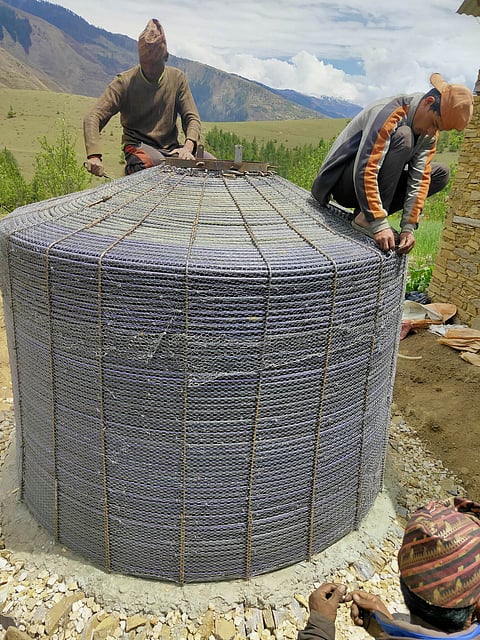
Led by Dr. Datta Bahadur Rawal, Partnership for Sustainable Development Nepal began by building a full water, sanitation, and hygiene (WASH) system around local needs. Water quality testing identified the most urgent problems. The project installed treatment systems in schools and communities, improved 5 shallow tube wells, upgraded 70 household toilets, and built 2 new school toilet blocks. Students joined hygiene awareness programs and families were trained in household water purification, so safer habits spread from classrooms into homes.
Impact
20,820 cubic meters of safe water supplied every year
About 170 households (around 650 residents) and 450 schoolchildren now have safe drinking water
About 1,100 people benefit directly, with wider benefits for neighboring communities
Open defecation among schoolchildren eliminated, and waterborne disease has fallen sharply
Nearly 13,000 trees planted, offsetting about 286 metric tons of CO₂ every year
Recharge ponds restored to protect groundwater for future generations
Built to last, and to be replicated beyond Nepal
The community now runs the system itself. Water User Committees and an Operation and Maintenance Committee, half of whose members are women, manage the infrastructure, while families pay monthly into a maintenance fund. Water quality reports and oversight from local government and partner NGOs keep the systems accountable. Designed as a model community in line with Nepal’s national WASH standards, the approach can be replicated across Nepal and in other regions facing similar water challenges.
WAFA has recognized 18 Climate Innovators since 2008, reaching 84 million people across 82 countries. For an initiative built on community strength and limited resources, being named a 2026 WAFA winner opens doors to the global network, funding, and visibility that can take Nepal's community-led water solution from one district to an entire nation and beyond across South Asia.
“From the schools of Butwal to communities across Nepal, this initiative shows that lasting water security starts with the people who need it most. They have already done the hard part. Now it’s up to the rest of us to help their work reach further" - Tina Lindgreen, CEO & Executive Chairperson, WAFA.