
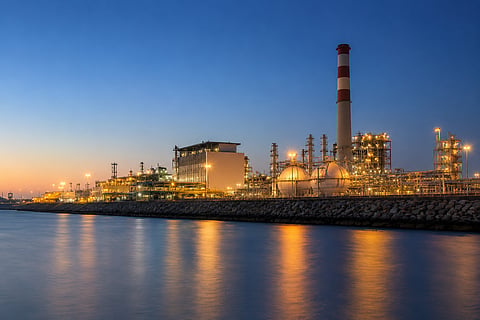
Critical Water Infrastructure Resilience Comes into Focus After Kuwait Facility Incident
Earlier assessments have warned that a comparatively small number of major facilities account for a large proportion of the Gulf’s desalinated-water production. This concentration means that disruption at one strategically important plant could place substantial pressure on neighbouring facilities, storage reserves and emergency distribution systemsAn attack on a power generation and water desalination facility in Kuwait has renewed concerns over the security of critical water infrastructure across the Gulf.
Kuwaiti authorities reported that the incident damaged several electricity-generation units and caused a fire at the facility. Emergency procedures were activated, and the fire was subsequently brought under control. The full effect on electricity generation and drinking-water production was not immediately clear.
The development is significant for the global water industry because Kuwait relies on desalination for approximately 90% of its drinking-water requirements. A prolonged disruption at a major production facility could therefore affect far more than industrial operations, it could directly threaten municipal supply, public health, commercial activity and essential services.
Desalination as Critical National Infrastructure
In arid Gulf countries, desalination plants perform a role comparable to reservoirs, river systems and major groundwater sources elsewhere. They continuously convert seawater into potable water for cities, businesses, public institutions and selected agricultural uses.
Unlike conventional water sources, however, large desalination systems depend on a closely connected chain of assets. These may include:
Seawater intake structures
Pretreatment systems
Reverse-osmosis membranes or thermal desalination units
High-pressure pumps
Electricity-generation and transmission systems
Chemical dosing and disinfection facilities
Product-water storage and distribution networks
Damage to any critical part of this chain can reduce production or force a plant shutdown.The risks may be even greater at facilities where electricity generation and desalination are integrated. A failure affecting the power station can also interrupt water production, even when the desalination equipment itself has not been directly damaged
High Concentration Creates Systemic Risk
The Gulf is home to hundreds of desalination facilities, many of them positioned along exposed coastlines and close to oil terminals, ports, power stations and other strategic infrastructure
This geographic concentration enables efficient energy and seawater access, but it also creates a shared vulnerability. A military attack, cyberattack, oil spill, harmful algal bloom, severe storm or disruption to electricity supply could affect several interconnected services simultaneously.
Earlier assessments have warned that a comparatively small number of major facilities account for a large proportion of the Gulf’s desalinated-water production. This concentration means that disruption at one strategically important plant could place substantial pressure on neighbouring facilities, storage reserves and emergency distribution systems
Water Infrastructure Can No Longer Be Treated as a Secondary Asset
Historically, geopolitical risk assessments in the Gulf have focused predominantly on oil, gas, ports and power infrastructure. The Kuwait incident demonstrates why desalination plants must receive comparable attention.
Water facilities are civilian lifelines. Their protection requires more than physical security around a plant boundary. Utilities and governments must evaluate the resilience of the entire supply system, including power availability, chemical stocks, membrane inventories, spare parts, communications, digital control systems and emergency water storage.
The incident also raises questions concerning the protection of civilian water infrastructure during armed conflict. Any serious interruption to drinking-water production can have immediate humanitarian consequences, particularly in hot and water-scarce environments.
Priorities for Desalination Utilities
The event reinforces the need for desalination operators to strengthen operational resilience through a layered approach.
Distributed Production
Water authorities should avoid excessive dependence on a single large facility wherever technically and financially possible. A network combining major plants with smaller modular systems can provide greater flexibility during an emergency.
Strategic Water Storage
Adequate storage capacity can maintain essential supply while damaged infrastructure is inspected or repaired. Storage planning should account for hospitals, emergency services, residential demand and other critical users.
Independent and Backup Power
Facilities should assess whether key treatment, pumping, monitoring and safety functions can continue during a grid failure. Backup generation and alternative energy connections can reduce the risk of a complete shutdown.
Spare Parts and Repair Readiness
Utilities should maintain access to critical membranes, pumps, valves, instrumentation and electrical components. Dependence on long international supply chains may significantly delay recovery following a major incident.
Cybersecurity and Remote Operations
Physical attacks are not the only threat. Desalination plants rely heavily on SCADA platforms, sensors, automated valves and process-control systems. Cybersecurity, network segregation, backup control procedures and trained personnel are essential elements of water-security planning.
Regional Emergency Cooperation
Neighbouring countries may need protocols for sharing technical expertise, spare parts, mobile treatment units and emergency water supplies during a large-scale disruption.
Industry Outlook
The Kuwait incident may accelerate investment in resilience-oriented technologies across the international desalination sector. Areas likely to receive greater attention include:
Modular and decentralised desalination
Mobile emergency treatment systems
Dual power feeds and energy-storage solutions
Advanced plant surveillance
Cybersecure automation platforms
Real-time infrastructure monitoring
Strategic product-water storage
Rapid-replacement membrane and pump inventories
Emergency interconnections between supply networks
For technology providers and engineering companies, plant resilience is likely to become an increasingly important component of project design, procurement and lifecycle management.