
Indian Cities Innovate by Recycling Used Water into Valuable Resource
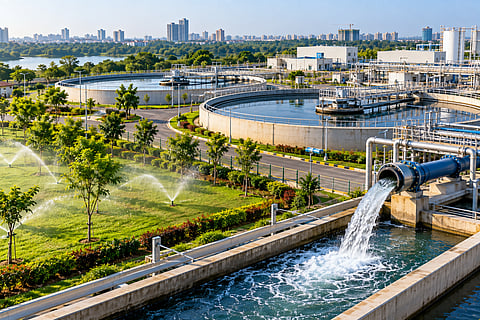
Indian cities are increasingly treating wastewater as a resource for agriculture, industry, horticulture and municipal services instead of simply disposing of it. The approach is being advanced under Swachh Bharat Mission-Urban through Used Water Management, Water Plus certification and ODF++ protocols.
Under SBM 2.0, projects worth Rs 11,785 crore have been approved to add 4,900 MLD of sewage-treatment capacity in smaller cities. Jaipur’s 215-MLD Dehlawas STP, Rajasthan’s largest, uses SCADA-enabled sequencing batch reactor technology and supplies treated water for irrigation and industrial use.
Indore reports that it has prevented untreated wastewater from entering rivers and drains, while Surat operates four tertiary-treatment plants with a combined 116-MLD capacity for industrial use, agriculture, lake rejuvenation and municipal services. Navi Mumbai reuses more than 30% of treated water in city gardens, vehicle washing and road-dividing systems.
Tirupati’s 50-MLD Thukivakam STP reuses 24 MLD of treated water. It sells 5 MLD to an industrial user for a reported net revenue of Rs 6 lakh a month and supplies 18 MLD free to farmers.
The examples show how treated wastewater can reduce freshwater demand, but reuse depends on reliable treatment quality, separate distribution systems, steady demand, monitoring and compliance with standards for each end use.