
Noyyal Sewage-Treatment Project Remains at DPR Stage as Pollution Concerns Continue - Tamil Nadu
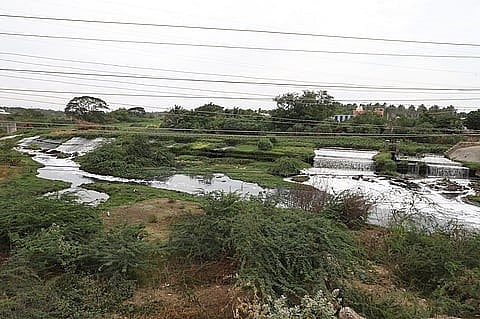
Coimbatore: Plans to establish sewage treatment facilities for nine town panchayats along the Noyyal River remain at the detailed-project-report stage, while untreated municipal wastewater is reportedly continuing to enter the river from settlements that lack adequate interception and treatment infrastructure.
The proposed programme covers Irugur, Sulur, Kannampalayam, Vellalore, Perur, Pooluvapatti, Veerapandi, Alandurai and Thondamuthur in Coimbatore district. The National River Conservation Directorate had earlier cleared a proposal to develop sewage treatment facilities for these town panchayats under the Nadanthai Vaazhi Cauvery river-restoration programme. At that stage, construction was expected to proceed after project costs were finalised and funding was released
Approval Has Not Yet Translated into Construction
The current report provided for review states that a revised or extended proposal has been submitted and that the project is still undergoing DPR preparation. This distinction is important. Approval of a preliminary proposal or scheme does not mean that construction has commenced. Before work can begin, individual treatment capacities, land requirements, sewer networks, pumping arrangements, discharge standards, capital costs and operation-and-maintenance responsibilities must be defined.
The reported delay indicates that the nine local bodies may continue relying on drains and existing disposal arrangements until interception and treatment infrastructure is completed.
Under the reported funding structure, the Union government is expected to contribute 60% of eligible project costs, with Tamil Nadu providing the remaining 40%. The same 60:40 structure has previously been reported for the wider Nadanthai Vaazhi Cauvery programme.
Sewer Networks Will Be as Important as Treatment Capacity
Constructing STPs alone will not prevent pollution unless sewage is collected and conveyed to the facilities.
Each project package will need to consider:
Underground sewer networks and household connections
Interception and diversion of sewage-carrying drains
Pumping stations where gravity flow is not possible
Treatment capacity based on present and projected population
Power supply and backup systems
Sludge treatment and disposal
Laboratory and online monitoring
Treated-water discharge or reuse arrangements
Long-term operation and maintenance
Without connecting sewers and dependable inflow, treatment plants may operate below capacity. Conversely, undersized facilities could result in bypasses and untreated discharges during peak-flow periods.
River Supports a Wider Water System
The Noyyal originates in the Western Ghats and flows through Coimbatore, Tiruppur, Erode and Karur before joining the Cauvery. Earlier project information places its total length at approximately 158.35 km, including around 62.21 km in Coimbatore district, where 17 dams and 25 ponds are associated with the river system.
This interconnected network means that sewage entering the river may affect downstream surface-water quality, irrigation channels, ponds and shallow groundwater.
Published research has also identified urbanisation, municipal sewage and industrial activity as significant pressures on the Noyyal basin, reinforcing the need for source control, wastewater treatment and continuous water-quality monitoring.
Farmers Report Groundwater and Irrigation Concerns
The report supplied to Water Today records concerns from farmers along the river regarding the effect of continuing wastewater discharge on groundwater and agricultural activity.
Such impacts will require technical confirmation through systematic monitoring. A credible assessment should include:
Upstream and downstream river-water sampling
Groundwater monitoring near affected agricultural areas
Biological oxygen demand and chemical oxygen demand
Faecal-coliform and pathogen indicators
Nutrients, salinity and total dissolved solids
Heavy metals where industrial inputs are suspected
Seasonal sampling during dry and high-flow periods
Publishing monitoring results would help distinguish between municipal sewage, industrial contamination, natural background conditions and other pollution sources.
Treated-Water Reuse Could Improve Project Viability
The proposed STPs should not be planned only as disposal facilities. Depending on treatment quality and local demand, the recovered water could support non-potable applications such as:
Landscaping and public gardens
Construction and dust suppression
Industrial cooling or washing
Road cleaning
Agricultural irrigation where technically suitable
Groundwater recharge projects subject to safeguards
Tertiary filtration and disinfection may be needed where treated water is intended for reuse. Dedicated storage, separate pipelines and end-use monitoring would also be necessary.
Identifying reliable users during DPR preparation could reduce freshwater demand and create a more sustainable operating model for the treatment facilities.
Interim Pollution-Control Measures Needed
Because the permanent facilities are yet to enter construction, interim measures may be required to reduce direct sewage discharge.
Possible short-term interventions include drain interception, modular treatment systems, phytoremediation, aeration and temporary pumping to existing treatment facilities. These measures should not replace permanent sewerage and STP infrastructure, but they may reduce pollution loads while the larger projects are developed.
The priority should be to complete the DPRs with clearly defined capacities, timelines, funding responsibilities and performance standards. Tendering and construction schedules should be announced only after administrative and financial approvals are secured.
Project Outcome Will Depend on Coordinated Delivery
The Noyyal programme involves multiple town panchayats, district authorities, water-resource agencies and funding institutions. A common implementation framework will be needed to prevent fragmented execution.
Successful delivery will require treatment plants, sewer networks, pumping stations and reuse systems to be commissioned together. Regular public reporting on DPR completion, funding release, tendering, construction and treatment performance would improve transparency and help track progress.