
The Thirst of AI: U.S. Data Center Water Consumption Nears One Trillion Liters Annually
By 2025, the expansion of artificial intelligence infrastructure pushed North American data center water consumption to nearly one trillion liters a year. As rack densities skyrocket, water availability is rapidly transforming from an environmental afterthought into a hard operational constraint.
The infrastructure powering the artificial intelligence boom has hit a critical bottleneck, and it is measured in liters, not watts. By 2025, U.S. data centers expanded for intensive AI workloads were consuming nearly one trillion liters of water annually, according to a recent analysis of investor and media estimates by SpaceDaily.
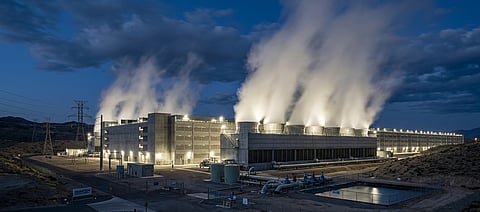
Driven primarily by high-intensity evaporative cooling systems that shed heat by releasing water vapor into the atmosphere, water availability has officially joined electricity as a primary risk factor for AI infrastructure, operations, and sustainability teams alike.
An Escalated Crisis, Not a New One
While the scale of current water consumption is staggering, data experts emphasize that the AI boom has intensified an existing structural vulnerability rather than creating a novel problem.
A peer-reviewed 2021 study by David Mytton in npj Clean Water revealed that U.S. data centers were already consuming roughly 620 billion liters of water annually (1.7 billion liters per day) long before the generative AI wave took off. Alarmingly, at the time of that study, fewer than one-third of data center operators even metered their water intake.
The integration of AI accelerators has merely accelerated this trajectory. High-density server racks running training workloads generate massive heat loads, requiring continuous cooling. While open-loop evaporative cooling methods are highly electricity-efficient, they scale water consumption directly because the water leaves the system as vapor rather than recirculating.
The Hidden Footprint: Power and Transparency
Managing this resource strain is severely hindered by a pervasive lack of industry transparency. Water usage is measured unevenly across the sector and is routinely disclosed only as an aggregated, company-wide metric rather than via granular, site-level reporting. This lack of visibility masks the localized impact data centers have on regional watersheds.
Furthermore, a facility's true water footprint extends far beyond its physical gates. Data centers are tethered to the water intensity of the electricity grid supplying them.
The Power Scale: The International Energy Agency’s (IEA) 2025 Energy and AI report noted that data centers consumed roughly 415 terawatt-hours (TWh) of electricity in 2024, a figure projected to more than double by 2030.
The Fossil Fuel Link: A recent preprint by Gianluca Guidi and colleagues estimated that 403 U.S. hyperscale facilities consumed between 68 and 99 TWh from mid-2024 to early 2025—with over half of that power derived from fossil fuels, which inherently carry a heavy operational water footprint during generation.
The Path Forward for Infrastructure Teams
For MLOps and infrastructure planners, treating cooling water as a mere externality is no longer viable. Operating in water-scarce or drought-prone corridors introduces severe regulatory, permitting, and reputational frictions.
To mitigate these risks, forward-looking engineering teams are adjusting their Total Cost of Ownership (TCO) models to evaluate cooling architectures more holistically. While closed-loop liquid cooling and reclaimed-water systems dramatically reduce direct local consumption, they often alter electricity efficiency, requiring a delicate balancing act between megawatt demands and liter consumption.
As data center clusters continue to concentrate in water-stressed regions, local governments are expected to tighten permitting limits and mandate stricter audits. Operators who proactively transition to low-water cooling technologies and implement site-level metering will likely navigate this looming regulatory horizon with far greater agility than those waiting for mandates to force their hand.