
Manufactured Water’: Tamil Nadu’s Tech-Driven Strategy Becomes Blueprint for Self-Sufficiency
In a move that mirrors the successful "NEWater" model of Singapore, Tamil Nadu is rapidly transitioning to a "manufactured water" ecosystem to insulate its capital and industrial hubs from the vagaries of the monsoon. Industry leaders and environmental experts now point to Chennai’s heavy investment in desalination and advanced water reuse as the primary driver behind the state's emerging water self-sufficiency.
According to Rajiv Mittal, Chairman and Managing Director of VA Tech WABAG, the shift marks a departure from traditional reliance on interstate river water and seasonal rainfall. "Chennai is in a rain-shadow region with no reliable perennial sources. By embracing desalination for potable needs and recycled water for industrial demand, the city is effectively becoming drought-proof," Mittal stated.

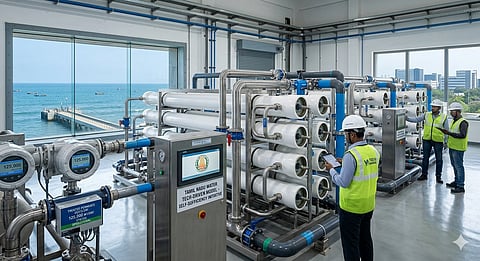
The state’s strategy is built on large-scale infrastructure, including massive 400 MLD (million liters per day) desalination plants and Tertiary Treatment Reverse Osmosis (TTRO) facilities. These systems are already enabling Chennai to support high-growth, water-intensive sectors such as semiconductor fabrication and data centers—industries that require ultra-pure water far beyond standard drinking quality
Nearly 70% of Chennai’s future water needs are expected to be met through these tech-led systems. This transformation has been supported by consistent policy continuity across successive state governments, prioritizing long-term environmental resilience over the costly and inconsistent "tanker model" of the past. Experts suggest that while river-dependent states like Gujarat face risks if sources dry up, Tamil Nadu’s reliance on perennial seawater and wastewater creates a sustainable, high-tech template for other water-scarce regions in India.